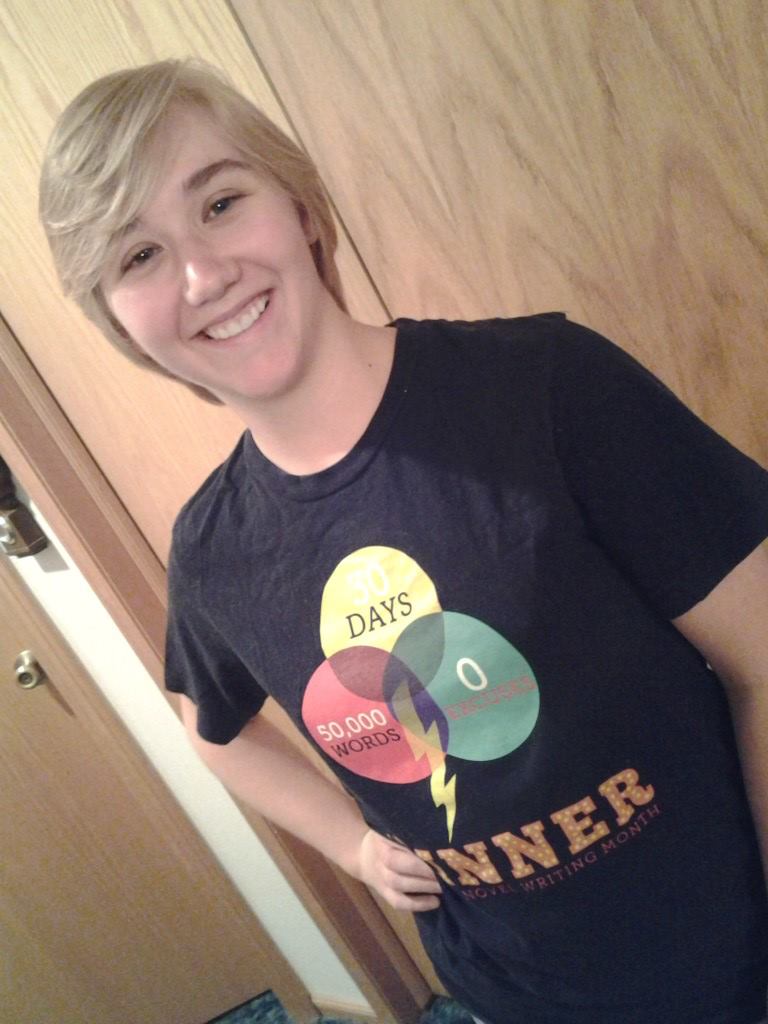
Compared to January and February, March seemed to move very slowly. With everything that’s been going on with the world and the virus, and home life and work life (yes, I am still working), it’s been hectic.
Here’s how I did on my goals from February:
I did not finish Under Grey Skies
I did reach the 75% mark and renew my interest in writing and finishing this novel
I prepared for Camp NaNo in the best way I knew how
By letting the idea swirl around in my head and waiting as patiently as I could for April to arrive.
I did not write a short story by hand
Unfortunately
I did however write a total of 18,360 words for the month in various projects.
Here are my plans for April:
Camp NaNoWriMo
Ghost House Heart: Minimum of 30K words (with little to no filler)
Finish Under Grey Skies
Every chapter I finish gets me closer to the end and it’s getting exciting. I have an outline and I’m ready to get this thing finished!
Ahhh November, the changing of the seasons, pumpkin spice everywhere, the feel of family in the air. And for several writers, National Novel Writing Month, NaNoWriMo. If you haven’t heard of it, or are not sure what that jumble of letters is, or if you should participate at all:
Here’s five reasons you should participate this November.
1. New project time!
We all have projects we want to start, but we feel we never have the time, or never have the right words to start. With NaNoWriMo, there is no time to debate whether the words are right or the timing is right. On midnight November 1st, it’s time to jump in and get words on that page. It’s a chance to start something new and leave your doubts in the dust by writing words without judgement.
2. It’s less than 2000 words a day to 50K
The actual number is 1667, that’s actually a lot less than 2000. But on the other hand, writing over the daily count of 1667 will help you to win earlier than November 30th. And if you think about how many words 1667 words is, that’s not even that much, especially if any words will do. And if you get stuck, or you’re not sure what to write, there’s always the forums.
3. Support from forum and writing buddies
While NaNoWriMo is a self challenge, it doesn’t mean you have to do it alone. On the website, there are forums, pep talks from writers and editors, and other writers competing to reach 50,000 words before the clock strikes midnight on December 1st. There is a ton of support and so many people wanting you to succeed in your novel.
4. You never know what can happen
You may start with something on the fly, not sure if it will ever become something, or if it will just grace your desk drawer like a dirty secret, but you won’t know unless you keep writing it, and keep learning what your characters have to tell you. Whether you plot or not, writing is an adventure, and your characters may lead you to places you never imagined. You could finish your novel and it could become a best seller one day, or even part of a series. The possibilities are endless!
5. You can say you wrote a novel!
You! Yes, you can say you wrote a novel. Whether you finish it or not, write 50K or not, continue it after until you reach the words “The End”. You can still say that you wrote a novel. It’s a great conversation starter, and a great accomplishment. You should be proud of your accomplishments whether you reach 50K or not. And you will have more words on December 1st than you did on November 1st.
Whether you are new to writing, or have been writing for decades, you have some knowledge. You know what you do, who you are, and what you write. Just as no two people can write the exact same novel, there are no two people that have the same exact knowledge base. Why not use that to your advantage as a writer?
This week’s lesson is: Write What You Know
Write something you know about, so you don’t have to do as much research in the first draft. Write something you can be knowledgeable about, so you don’t accidentally write you into a corner, and start over again. You don’t even have to know everything about the topic, but it interests you and you have what I like to call “TV Knowledge”.
TV Knowledge is the most basic grasp of something. It’s the Law and Order version of Law, the CSI version of crime scenes, the House M.D. of medicine. It’s just enough knowledge to make a somewhat intelligent plot that could be plausible. It’s just enough information so the viewer, or in your case the reader, doesn’t get bored. It’s the knowledge dumbed down enough so readers don’t feel like they’re reading a textbook.
TV Knowledge is great to start with, for first drafts, to get your words on the page so you can fix them later. But it’s not the best for a final draft. I’m not saying you have to research every little thing, but you have to keep it believable for your genre. You have to do enough research after the first draft to make it seem believable.
There is nothing more difficult than trying to write about disseminated intravascular coagulation if you can’t even pronounce it or if you don’t even know what it is. If you know something about what you are writing, then the words can come at least a little bit easier. If you don’t have to research every other sentence, you can write easier. Sure, there will be some things that you have to research, but that’s only after the first draft is done.
First drafts are for writing. Subsequent drafts are for researching. To start out, write what you know.
As a writer for several years, I have several examples of writing what I know. One of my first novels in college, which is currently on hiatus, but is connected to my current series, was about a CNA, which is what I was at that time. I knew quite a bit about that, so I started with that, which led to a journey that started with a kiss. It was cheesy, a bit immature, and needed a lot of work, but I wrote what I knew at that time. I put my experiences and my feelings onto those pages. I made it mine. No one else could have written it the exact same way that I did, because they didn’t know all that I did. All that I do.
There are nine types of knowledge. Every one of them can aid in writing.
So what do you know about? How does that make it’s way into your writing?