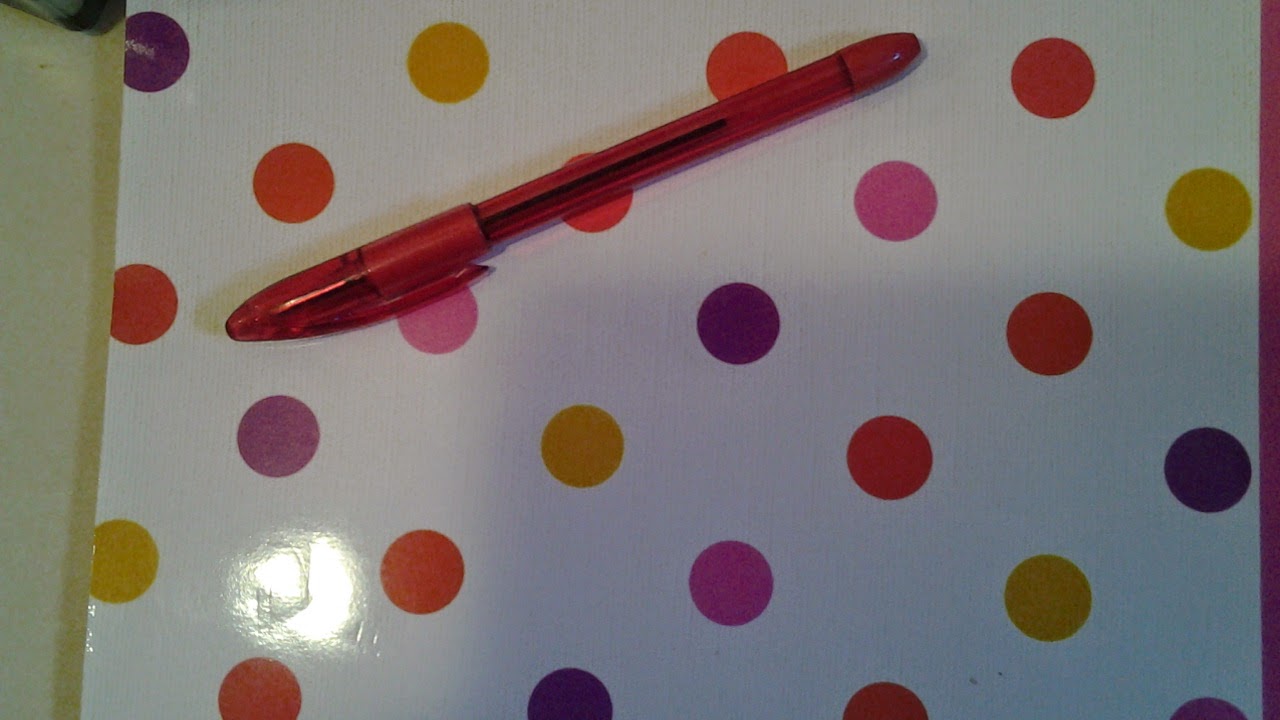
Write a conversation about a man that dials the wrong number and encounters an angry woman. End the conversation with “Well, I suppose so.”
He is bold. She is italics
Hello, is this Marina?
You called a number and you don’t know who it is?!
So, this isn’t Marina?
What gave that one away, genius?! You have the wrong number!
Well then who is this?
That is none of your damn business! Don’t be trying to hit on me just because you can’t find Marina!
Sorry. I met this cute girl at the bar last night and she wrote her number on my bar napkin, but it got smudged in my pocket. I was really hoping this was the right number
How the hell is that my problem? You have the wrong number. Hang up the damn phone!
Are you sure Marina isn’t there? I swear this last digit is a five.
Marina? Hmmmm, let me check…NOOO! Hang up the phone you weirdo!
Write something based on the next line of dialogue you hear.
Dinner didn’t help.
They were fighting again, and it was starting to become more of a daily occurrence. They both knew that fighting wasn’t the answer, and they resolved to stop fighting, but within a few hours, either one or both of them had found something to fight about again.
They had been together for nearly 5 years, but the fights didn’t really start until they moved in together. He was sure the neighbors loved their 2 a.m. fights about blanket stealing, or their 7 a.m. fights about hot water usage. She frankly didn’t give a damn about any of it.
Then that morning, everything changed. Instead of fighting before work, arguing about the smallest things, it was quiet. Barely a word was spoken between the two of them, and it felt strange to him. Then, before she left, she spoke.
“I want to break up.”
He was too stunned to say anything, so he just stood there in silence, the door to the apartment still open, him in nothing but his boxers, the open carton of milk in his free hand. In an instant, it was as if his world, all he knew, was coming to an end.
It was then that he resolved to keep her, even if they were fighting a lot lately. Her favorite thing, when they were first dating, was to make dinner together. He was going to save their relationship, and they were going to get a decent meal out of it.
Once he had regained his bearings, and enough sense to close the front door, he called into work. Missing one day to repair what she thought was broken would definitely be worth it. It would give him enough time to clean up the apartment and do everything to help her, help them remember the good times together.
By the time she got home, he had nearly everything prepared. He was showered and dressed, had the ingredients prepared. They were going to make her favorite, and he hoped it would make her smile.
She wasn’t smiling at first, but he hoped he could change that. He put her on her favorite part of the preparation, and things were quiet for a while, and then they both opened up. By the time the meal was put in the oven, they were laughing together, like old times.
By the time it was ready to eat, he was feeling pretty confident in his wooing abilities. He was getting comfortable with their status, but somehow not quite comfortable enough. Something was still off, but he decided to let it slide. Their months and months of discord could not be solved in one night.
When their plates were both cleared, and he was just about to suggest dessert at the place where they had first had dessert, she pushed her chair away from the table and sighed.
1. Decide you like to look at art on all canvases.
2. Decide you want to be art
3. Research how to care for tattoos and keep them looking nice.
4. Research images for your tattoo.
5. Find an image you would like on your body.
6. Research styles of tattoo art or ask around for ideas.
7. Research tattoo artists and pricing.
8. Meet your artist and schedule an appointment
9. Take care of your skin between the time you schedule and your appointment
10. During your appointment- find a comfortable position
11. Relax and breathe through the pain- it varies depending on the body part tattooed.
12. Pay and tip your tattoo artist
13. Keep the wrap on for a few hours and then clean and lotion your new tattoo.
14. Lotion your tattoo, especially during the healing and peeling process.
15. Repeat steps 5-14 until you are tattooed enough to your liking.
Write a piece based on the colors of the walls of the room you are in.
These are the colors in the room I was in.
\
The bouquet he gave her was, if nothing else, creative. The purples and the oranges of the flowers, mixed with the yellow of the ribbon were not the colors she had ever seen in a bouquet before. Still it was the thought that counts.
“Thank you, Timmy” She said, “but I’m allergic.” She gave him a sweet smile. “Go give them to your mom, and I’ll see you tomorrow morning.” She handed him his backpack and sent him toward the bus with a wave.
Put your music player on shuffle. Using the first song that comes up, write something inspired by the first and last lines of the song.
The first song that came up was Slow Love Slow by Nightwish.
The first line: Come and share this painting with me
The last line: Slow, love, slow, only the weak are not lonely
This woman is going to be the death of me! Weeks ago, at the suggestion of my wife, I hired this 20-something to help care for the paintings, lead some of the tours during the day, and when times were hard, to guard the paintings at night. I argued that I could do it all myself, that I’m only 59 years young. She was hired before I knew it.
I was sure my wife of 30 years had never met her. If she had, she never would have hired her. My wife knew my weakness for pretty red heads, for she was a redhead herself. While my wife’s red hair had turned a more faded orange with age, the new hire’s was a bright vibrant red that, when set against her pale freckled skin, made her absolutely glow. Even in the low lighting of the museum at night, I had no trouble spotting her. Her long red hair cascading down her back as she stood facing La Pieta.
“You needed me, Amy?” I said, no pretense, no manners. Contrary to popular belief, the museum was not as hospitable at night, and my warm bed still won out. I had warned her to only call if there was a real emergency, especially if she was on the night shift, so I hadn’t even thought to dress in more than just a jacket over my pajamas and my slippers.
She turned with an excited smile as soon as she heard my voice. “Come and share this painting with me” she said, and I knew it wasn’t a real emergency. I did wonder why she decided to pull her stunt that night though. She had already been working at the museum for nearly a month and had the time to see all the paintings that lined the halls several times.
It was as if God knew I was struggling, and he put her there that night to test me. In her low-cut top, barely even covered by her imitation bomber jacket, and a thin scarf that called attention to her chest, it was a test I would surely fail. One of the first things I had noticed when she first came from the agency was her affinity for tight pants. That night was no exception. She was going to be the death of me, in career, life and marriage. Still, I stood next to her, in front of the painting, more focused on the painting than her. Perhaps if I could resist her temptations and do as she asked, I wouldn’t have to sin.
Most importantly, I wouldn’t anger my wife. The painting was as it always had been. As one of my favorites, I had stood in front of it, admiring the beauty, the colors, the forms, and all the symbolism within it. In it, Jesus was a broken man, yet the artist had painted him as if he was just sleeping. The stigmata were not forefront in the painting. It was the rare moment caught after all of the crowds had left and the Romans had thought him dead for good. I kept my eyes on that rather than my pretty, young assistant to remind me of all the good that had come from my life so far. Also to remind me how quick it could be all taken away.
“I love this piece,” She spoke and I could feel her eyes on me rather than the painting, “You can just feel the suffering from Mary and Jesus and yet there’s this sense of relief.” I willed myself not to look at her, but to focus on the colors in the painting, the blues, and the faded reds and oranges. The same oranges that if I squinted reminded me of my wife’s beautiful hair. “Maybe that’s why your wife asked me to meet you here.”
I knew I had to look at her then. Why would my wife ask her to do such a thing? It made no sense. Why would my wife set up a meeting between me and my assistant and not just tell me about it? Why all the secrecy? She was no longer smiling and her face was drawn in a serious line. There was no way this was all a prank.
I knew I had to say something, but she spoke first. “Do you know why your wife hired me?” She asked, her eyes not leaving my face. Even in the dim light of the museum, she could see my doubts, and I knew she was about to ease them. I shook my head and she continued to speak, her voice hushed, “She knows you have an attraction to red heads. She thought it would be easier if you had an attractive assistant.”
My mind was whirring, but I managed to focus on the events of the evening and not my anxious thoughts. “What would be easier?” I finally asked, unsure just what was going on. My tired brain struggling to grasp the gravity of everything. If my wife and my new assistant wanted to confuse me, shaking me out of slumber at two in the morning was the way to do it.
She took a deep breath, and seemed to struggle against the words leaving her mouth. “Rupert,” She said gently, the only word that freely escaped her lips, “Your wife was diagnosed with cancer months ago.” As soon as she said the words, it was like she wanted to pull them all back in. “That was why she hired me.” She continued, trying to ease the shock, “She knew if your attentions were drawn elsewhere, you wouldn’t notice her suffering.”
I just continued to stare at her. My mind was still trying to break down the information it had just received. How could I not notice that my wife had had cancer for months? How could I not have seen the changes? In an instant, it clicked. “Why am I here?” I asked her, nearly scared to death for her answer.
“Did you kiss your wife goodbye before you left?” She asked, her face still drawn tight, no emotion getting through without her permission first. I nodded slowly, still thinking about the question and the relevance. Then all at once it seem to click. And she answered my thoughts or so it seemed. “She didn’t want to lose her hair and seem unattractive to you.” She explained. “She wanted you to remember her as she was, not what she would become.” She explained.
And I just ran. I ran to my car, and I raced home to my wife, only to find the flashing lights of police cars, and ambulances waiting for me. The white sheet covered gurney being wheeled down my front walk way, directly toward where I stood.
Writing takes a toll on every aspect of our lives. Whether you call yourself a writer, or a poet, or a reporter, or anything to do with writing, you will start feeling the toll it takes on your body, physically, emotionally, psychologically. Sometimes we feel it more than others. When we do feel that increased toll, sometimes the only option is to take a break.
This week’s lesson is appropriately Take A Break
After Camp NaNoWriMo, which ended yesterday, thousands, if not hundreds of thousands of writers are recovering after a month solid of writing time. Some writers attempted to sprint to the finish, writing several thousand words in the last hours of the challenge, while others finished days or weeks early. Either way, whether they crossed the finish line, or fell short, most of them are taking a break from writing today.
Trying to write several hours a day for a month straight is tiring. Writing, whether we realize it or not, is a full body hobby. Sure, it’s primarily the hands and the brain that do all the work, but we can’t forget about posture and eye strain, wrist cramps, legs falling asleep, and any other complications you may face. In short bursts, the pain and strain are minimal, but breaks are still needed.
Writing seems easy to everyone that isn’t a writer. All you do is put words on a page, right? Not even close. Writers are expected to write one thing after another, be full of ideas, and endless energy to write. All of which are pretty much the opposite.
There are good times to take a well deserved break
Take short breaks between chapters and section breaks
Get a drink and a snack and stretch, move blood into your muscles that have been sitting for a while, but make sure that you remember where you were heading with your plot and action. I tend to leave myself notes at the beginning of chapters and section breaks, just to remind myself. It helps to get back into the writing mojo later. What also helps is writing a sentence or two of the next section before a break.
Take longer breaks between finished works and pieces
I tend to struggle a little with this one. After I finish a piece, whether short story or entire novel, I get that jittery excitement, the urge to start something right away, or sometimes the urge to start editing right away as soon as possible. These are both pretty bad urges, and can cause a rather quick burn out. I recommend working on something else that isn’t writing. I tend to knit, or doodle, preferring something solid with my hands, but other writers play solitaire or online games. Whatever works for you.
So, Take a break for 5 minutes after you read this. You deserve it!
April is swiftly drawing to a close and I’m sure many writers out there are pushing to make their final word counts. I am usually one of them, but not this month.
For some reason, this month was just not meant for writing and that’s perfectly fine. Maybe it was because I had been pushing so hard to write everyday in January, February and March to write every day and I just needed a break. Maybe it was the events surrounding this month. Maybe it was just a combination of everything just telling me “Slow down!”
I originally planned on writing something completely new to get in the mood to finish my current works. Writing was starting to become more of a chore than a hobby and I was having trouble getting into the writing mood to find that passion to finish my novel. So I started a series of thirteen short stories based on an album. A change of pace.
I finished one. ONE! In this entire month, but I am perfectly fine with that. I wrote when I felt the need to, and I pushed myself to finish it today so I can start fresh in May.
I ended up with just over 7000 words, but that is better than the 0 I started with at the beginning of the month. 7000 words is a start, and it’s something I can work with the next time I need a break from my novel and my series. I created great characters that should be easy to get back into.
Tomorrow begins a new month, and that means new challenges. I have been thinking about it for a while now, and I have decided I want to try a blog challenge. I’ve had this blog for nearly three months now, and I’ve talked a lot about writing, but I’ve never really shared any yet. With this challenge, I hope to share some with you.
The challenge is one I found from google, and it was based from Tumblr. I made a few changes and made it my own, but I will post the original image, if any of you want to join me in mine, or do the original instead.
Ready?
Here We Go!
Day 1:Put your music player on shuffle. Write something inspired by the first and last lines of the song.
Day 2: Write something based on the color of the walls in the room that you are in.
Day 3: Write a fifteen step list titled “How to be _____”
Day 4: Write something based on the next line of dialogue you hear.
Day 5: Write a conversation about a man that dials a wrong number and encounters an angry woman. End the conversation with “Well, I suppose so.”
Day 6: Write a rhyming poem about getting increasingly drunk.
Day 7: Write about your reaction when the object on your left turns into the object on your right.
Day 8: You are now unable to leave your room for the next week. Write about your experiences day by day.
Day 9: Think about a word and google it. Write about the seventh image.
Day 10: Write a short rhyming poem about the last book you read.
Day 11: Make a list of songs (Like a mixtape) for someone you hate. The songs cannot include the words “Hate” or “You” in the title.
Day 12: Make a list of songs for someone you love. The songs cannot include the words “Love” or “You” in the title.
Day 13: Write about the object to your left as a metaphor.
Day 14: Write a book report about an “Adult book” by a 5th grader.
Day 15: Find the worst lyric from your least favorite song and make a character say it.
Day 16: Imagine you are sitting on a park bench. Write an Ode to a person passing by.
Day 17: One of your characters is sitting on a rooftop with an animal. They must make an important decision after talking to the animal.
Day 18: Write a freeform poem titled “The Formula For Happiness”
Day 19: Write a sappy poem for your loved one.
Day 20: Write a script with two characters talking to each other. Both have secrets they are considering sharing with the other person.
Day 21: Write from the point of view of a person that just got fired.
Day 22: Write a poetic prose piece where each sentence is one word.
Day 23: Write about an encounter in a restaurant. Someone orders their favorite dish, someone else leaves early.
Day 24: Write from a stream of consciousness point of view. Someone’s life is about to change in 3 minutes.
Day 25: Write a series of emails between a son and his father. They are estranged and eventually the mother must step in.
Day 26: Write a letter to your favorite person telling them why they are your favorite.
Day 27: Write a poem from the point of view of a bride, explaining how she got to that point and that she has cold feet.
Day 28: “The Morning After”
Day 29: Write a letter to your least favorite person, explaining why they are your least favorite.
Day 30: Write a poem titled “The End.” It cannot be about death, a break up or the apocalypse.
Day 31: FREE DAY!
Thank you to the tumblr users who created this challenge. Shestandsattheedge, rippedfishnets and hipposwearingjackets!
Sometimes I wonder what my life would have been like if my parents had stayed together, or if I had lived with my mom instead of my dad. I’m not sure either would have been better than the life I have right now, but it’s still interesting to think about at times.
My mom and I haven’t always had the best relationship. When I was a toddler, my dad got custody and my mom spent years in and out of jail. She didn’t always make the best choices, but everyone makes mistakes. She and I didn’t see each other a lot during my teen years, and that was hard growing up, but it might have been for the best. For years, we were not in contact, but that changed in 2010.
In June of 2010, I reached out to my mom and we began emailing back and forth. It was lucky that we did because a few months later she was diagnosed with colon cancer. We were still just emailing at that time, she kept me updated on her treatments and I kept her updated on my writing projects and school. For a long time, her diagnosis didn’t seem real, so I avoided it. I stupidly thought “she’s getting treated, so she’s not as sick as it sounds”. Part of that too was that she kept a lot of it secret, how severe it really was. She focused more on my writing skills and encouraging me to continue my writing, and I am grateful for that, but at the same time, I wish I had known how serious it really was.
Two years later, around September of 2012, she printed my first completed story. She was not a tech expert by any means, but she took it down to the local Office Max and printed two copies. One for me to edit and read through, and one for her and her side of the family to read. That was the first time I realized my writing was ever really worth something. That was the first time I felt proud of my writing, and the first time I even considered going further than just writing it and leaving it in the “to be typed” tote in my closet. I can never thank her enough for that.
Not too long after that, in December of 2012, she was put on hospice. Hospice means that the medical professionals believe that the patient has less than six months to live. I started to see her behind my dad’s back, even though I was an adult, and she taught me a lot about her cancer, her treatments, and some of the things I had missed when we were apart. It wasn’t until February, and full swing in the first nursing program, that my dad finally found out about how serious her condition was and allowed me to see her on the weekends.
We talked about a lot on those weekends, and I am so glad we did, because I didn’t realize how short our time really was. It was around finals for the first semester in nursing school and I was convinced that I had failed one of my finals. I emailed her, telling her that I was convinced I would drop out of nursing school. She called me the next day, while I was in class, and she told me some of the greatest words that I needed at that moment. “You passed, I’m sure of it, and if you didn’t, then it wasn’t meant to be”.
Those words may seem harsh, but they were what I needed to hear. After, she asked me to call her back when I could, and I promised I would. I never did, and I wish I had. We had so much more to talk about, I had so much more to say, but we never got that chance.
It worked out that I actually got to be there when she passed a few days later. I had gone over for her birthday, as I had planned to, only it wasn’t the day I had planned. Her hospice nurse had increased her dose of dilaudid and she was basically knocked out. She died the next morning, but I stayed up most of the night with her, spending time with her. It wasn’t the easiest of nights, and we didn’t communicate with words, but that didn’t mean we weren’t communicating.
I’m dedicating my books to her, because she inspired me, she pushed me, and most of all she loved me, whether I was a writer or not, a nurse or not. She loved me for me, and I only wish she could be alive to see the book she helped to inspire published.
My mom held my hand for so many years, it was time I held hers.
If you are a writer, it is most likely that “Writer” is not the only job listed on your resume. A lot of us have other jobs, other hobbies, other things that need to get done first. Every day, I make a To-Do list, and writing is always the last thing on that list. It is after the reading, the studying, the dishes, the laundry. After whatever else I put on that list. Some days, I don’t even write. And that is ok. Sometimes, life needs to come first. Sometimes we writers need to go out and be social, or make sure that the kids are fed before we start writing that next page. Sometimes life needs to come first.
So this week’s lesson is Enjoy Life, But Don’t Forget to Write
So how do we as writers do that? I like to think that I am a strange breed that can only write when everything else is done and I don’t have plans to go out that day. I somehow convince myself that I will want to continue to write and not leave the house because I will lose track of time and completely forget my plans. This rarely ever happens, but I still don’t write on days that I have other plans. I used to feel bad about this, but not so much anymore. I get nervous and excited and that messes with my writing mojo, and that is ok…
…As long as it doesn’t mess with my writing mojo forever.
So how do I get back into the writing habit and get over that “nervous writer’s block”? Well, depending on what it is, or what is making me excited, sometimes I have to wait for it to pass. Sometimes, if it’s a long event or time away from my usual environment, I have to get more comfortable with my new location or event.
I happen to have several examples over the past few weeks, and not a lot of writing to show for it. First, there was Phoenix, which I thought I overcame when I started writing for Camp NaNoWrimo (Which is not going as well as I would have hoped). After that, there were essays and reading for school (which did not go as planned at all). And now there is Researching and tattoo care for a few weeks.
I know I will get back into writing eventually (I can feel the stirrings already, the itch to grab a pen and just write away), but in the meantime, I am enjoying life and what I am learning from it. I deserve a break after writing every day for two months straight.
So if you haven’t written in a while, it’s ok. Breathe and try again tomorrow. Or next week, or next month. The words will come eventually, and they will be better than if you had forced them out. Enjoy life while you can. Writing can and will wait.
Writing is hard. A lot of readers just think words on a page means instant book, but we writers know that is far from the truth. Writing takes editing, editing takes time and rewrites. Words rarely end up on the page and stay where they are in the first draft. Sometimes, the whole process of writing can be exhausting.
This week’s lesson is: Work at Your Own Pace
This month, I am working on Camp NaNoWriMo, and to be honest, it’s not going as well as I would like. I am supposed to be writing at least 1667 words a day, and my average for the first week is much lower than it should be. But I am not here to complain about how my novel is going this month.
Working at your own pace is important. Sure, some writers write a complete novel in a month, edit it the next month, rewrite the month after that, and on and on until they have a complete novel. That paces is just dizzying to me. Some months, I can barely even get 1000 words on a page let alone 1 word. Some months, days, and even years can just be plain hard. The usual advice is “Write Every Day” or “Write Through Your Doubts”, but those are general tips, by authors and bloggers that don’t know you personally.
There are instances where it is better to write at your own pace. I can think of several instances that I can think of where waiting and not forcing it is much better for my writing. There are several instances where if I had rushed it, the work would suck and need so much more editing later.
Sometimes writing is easy, but a lot of the time it’s not. Some days writing is the hardest thing in the world, and that is totally ok. Writing every day is best to build a routine, but it doesn’t always work. So try your best to write daily, but some days it just doesn’t happen.
When it doesn’t happen, don’t beat yourself up. There will be days, or sometimes even weeks, sometimes longer where you don’t write. When that does happen, try to figure out why you can’t or don’t want to write. Sometimes it’s as easy as “I am stressed” or “I am more interested in doing something else”. One that I face occasionally is “I don’t like where I left off on that page” or “I don’t know whay words to put down”. If you can’t find a reason or it’s just not happening, try and think about where you want to go with your piece or a scene that you want to write and jump around.
If none of that works, try writing one simple sentence. Whatever comes to mind, story related or not.
Happy Writing!
What is your general writing pace?
If you are participating in Camp NaNoWriMo, how is your word count looking?
The first week of Camp NaNoWriMo is unfortunately not going so well. I only have about 5K words when I should have at least three times that. But that’s ok! Because I am learning things I never thought I would, and I am taking a break from my year long attempt at a novel for a while.
I hope Camp NaNoWriMo is going better for the rest of you. I shall be trying to catch up eventually.
Ideas are everywhere, but sometimes they seem weird or outlandish, sometimes overdone, or exactly like another writer’s idea. If you’re anything like me, that can be a frightening idea, that could keep you up at night, and make you doubt every word you put on the page. Sure, there are a lot of ideas out there, and some will be similar, but that does not mean we have to fear them. It doesn’t mean we have to fear writing them either for ourselves or in public.
It took me a while to realize that I could write in public without judgement and explain my ideas without feeling like I would be labeled a weirdo. Writing used to be very secretive for me, and it seemed like there were galaxies between every other published author and me, that I could never reach the stars where they were. And then, I decided I didn’t want to be afraid anymore, I decided that I was done being a doormat, that it was time to really exist instead of just catering to everyone else.
The lesson for this week is: Write Without Fear
When you allow yourself to write without fear, it opens a kind of doorway to many other ideas that were once closed off. Ideas that were once too weird you can finally face with the attitude of readiness and excitement. Once you decide to write without fear, it’s like opening a can of worms. There are consequences, but it is all worth the risk.
When you write without fear, you stop being afraid of writing in public. You stop fearing that someone will read your work and laugh in your face. You let your anxieties go, and start feeling more confident in your writing and your skills. You grow as a writer and realize that your fears were a cage, keeping you confined, keeping you naive and complacent with the ways things were.
Real fear is there to tell us, to warn us that something may be dangerous. We fear sharks because they can attack people. We fear death because it is an unknown, a point of no return. We fear writing…. why?
There could be several reasons, but that doesn’t mean they are valid. Sometimes the fear is so strong that it freezes us. I did not write for a week, novel, blog or otherwise, because I was in a new environment and afraid that the people I was staying with would find it strange. I went back to my old ways of answering the question: “You’re a writer?” and I hate that feeling, the noncommittal shrug and the “yeah, I guess”. That was the fear and I hate my fear looking back on it.
Fear will not go away on its own. You, as the writer, the owner of that fear, have to take small steps to release that fear. Whether it’s talking to your fear and telling it to GTFO, or just simply writing a sentence in an uncomfortable place. It might even be answering the question “You’re a writer?” with the response “Hell Yeah I am!”. There are several ways to face our fears, and leave them behind when we write.
Sometimes, just opening the notebook, or the document can be the scariest part of writing
Being a writer could mean anything. It’s a quite large umbrella term, just like artist or scientist. Like any other label, what we use as writers, or artists, or scientists defines us. Writer could mean anything from articles to webblogging and anything inbetween. There are many tools that we as writers use, whether it be programs, or specific devices or inks. Anything that helps us get those words down on the page, or whatever mediym we decide to use, makes us writers.
Our choices in the tools we use says a lot about us, a lot about our circumstances, and a lot about our preferences. We can consistently stick with one medium, or we can use several at a time. The choices are endless, and I suspect they will be forever changing.
When I started writing, I used a pencil and a spiral bound notebook. It worked at the time, especially since I had just started eighth grade and still felt more comfortable with a pencil than a pen, since I had been using only pencils since I learned how to write. It worked for a while, but then I began to notice that the pencil rubbed off and made the pages ashy and unreadable in certain areas. Not only that, but the metal spirals would get crunched and never remain quite viable enough to prevent the ripping of pages. If I wanted to preserve my writing, so I could continue to read it, and work with it, something had to change.
So I switched to ballpoint pens, and I went through several brands before I found one I actually enjoyed writing with every time. It took a few rounds of trial and error to find which pen didn’t leak through to the other side of the page, or bleed at just the slightest humidity, making the page look messy, or which pens would scratch through the pages with just the slightest change in pressure or ink. It took several rounds of pen buying, and pen tossing before I found the best fit for me.
A little background on my handwriting “posture”. I am left-handed (which means I pretty much always smudge), and I balance the pen on my ring finger rather than my middle finger. Using my ring finger as a balance gives me more support from my thumb, fore finger and middle finger, but that also means I can write pretty heavy on the page at times.
The pens that work best for me, and that I love are the R.S.V.P. by Pentel. They have a grip to support my fingers and prevent me from gripping too hard and writting too heavy, they have great ink flow and last a pretty long time (depending on how much I write), they have a clear plastic, so I can actually watch the ink and not be too surprised when I run out, and they come apart easy so I can replace the cartridge when needed. Not only that, but the ink stays where I want it on the page, with no bleeding or fading and it looks amazing. They come in several different ink colors, and sizes, which makes the choices practically endless, and you can even “build your own” as I like to call it. Currently, I have a purple grip and an electric blue topper, and I just replace the ink cartridge when it runs out.
As for notebooks, I used spiralbound for several years, just dealing with the crunched metal spirals and the hazzards that came with it. I was used to ripped pages, small jabs, notebooks stuck together, and many other hazzards that presented themselves. After all, the writing inside was still readable, and spiral bound were the cheapest and easiest. And then I found the non-spiral bound. The notebooks with the smooth edge and the pages that had no change to get ripped when turned on the warped spirals. So I bought a few, and tried them out. I liked them, but the only problem was in my area therer were few of them sold. Finally, after years and years of not seeing them, and still using spiral bound, or loose leaf paper in a binder (with lots of those reinforcement stickers, and staples), I came across composition notebooks.
I started using composition notebooks for all of my writing toward the end of 2010 and I absolutely loved them. No spirals to get warped or catch my hand on, no risk of pages falling out, hard cardboard cover, basically no problems, Not to mention super cheap almost year round. They also come in fun festive patterns and are easy to decorate with sharpies.
So my current tools are a composition notebook (at least 3 for each book, one for each section) and an R.S.V.P. by Pentel with several refills.
What are your handwriting tools? Why do you like them best?
As humans, we feel the urge to learn. We feel the urge to expand and learn new things, attempt new things. There are several quotes about knowledge and ignorance, and progress. As writers, we cannot stay in the same place forever, we must advance and grow and learn.
Last week, the lesson was write what you know. This week is a continuation in a way. This week’s lesson is: Try Something New
Yesterday, I did something I have never done before. I got on an airplane and I wrote on that airplane. That was a new, amazing, experience and I’m glad I was able to do it. It was a pretty short plane ride, but it was perfect for a new experience. It was a little taste of something I hadn’t done before.
So what happens when you try something new, either in life or in writing? You gain experiences and stories, both to tell and to write. You can share those experiences with others, and the knowledge that comes from those experiences.
I’m not saying you have to do something big, like get on a plane, or spend your whole life savings on a new house or car. Start with something small that you’ve wanted to try for a while. Try waking up at a new time, or trying a new food. It can be something small. Remember, small steps can lead to big changes.
There are a lot of new experiences to be found in writing too. Try learning something new or researching something you’re interested in. It can be a small step toward a huge change. Try handwriting if you usually type, or typing if you usually handwrite. Try writing a new perspective or even a new character. There are so many options out there, and so many new things to try as a writer.
I’ve tried a lot of new things in the past few years, and if I hadn’t, I wouldn’t be as great of a writer as I am now. If I hadn’t tried such new things as NaNoWriMo and rewriting and editing, I would not have those experiences and that information to share with all of you. I wouldn’t be as knowledgeable or comfortable with writing, or even sharing all of this.
Learning new things, and trying new things can be frightening. Certain things can be scary, like getting on a plane, or writing a new perspective, or even changing something as small as your morning cereal. Fear is in our lives to help us know what could be dangerous and what could be life-threatening, but a lot of the time, we fear too much. Sometimes, in the face of change, we need to confront our fears head on, and continue on despite them.
So face your fears and try something new. It could actually be fun!
Try something new and give people something to say, whether they doubt you or not.
This year, in both April and July, hundreds of thousands of people will be writing a novel in a month. Each one of those hundreds of thousands of people will write their own novel, whether it be five pages or five hundred. Fingers will be flying, pens will be scribbling and writers will be writing.
I will be one of those writers, and I finally have my plan for this April. This will actually be my first serious attempt at Camp NaNoWriMo that is not a rewrite, or that doesn’t coincide with finals, or resesrch papers. Plainly, this is the first April where I will have time to write what I want, and give it the attention it needs.
So what am I writing this April?
The Thirteenth Step
Details are still a bit sketchy, like names and details. The basic premise is a med student who falls down the spiral of addiction after turning to selling drugs to pay tuition.
Stay tuned for updates!
Are you going to try Camp NaNoWriMo this April? What are you writing?
Whether you are new to writing, or have been writing for decades, you have some knowledge. You know what you do, who you are, and what you write. Just as no two people can write the exact same novel, there are no two people that have the same exact knowledge base. Why not use that to your advantage as a writer?
This week’s lesson is: Write What You Know
Write something you know about, so you don’t have to do as much research in the first draft. Write something you can be knowledgeable about, so you don’t accidentally write you into a corner, and start over again. You don’t even have to know everything about the topic, but it interests you and you have what I like to call “TV Knowledge”.
TV Knowledge is the most basic grasp of something. It’s the Law and Order version of Law, the CSI version of crime scenes, the House M.D. of medicine. It’s just enough knowledge to make a somewhat intelligent plot that could be plausible. It’s just enough information so the viewer, or in your case the reader, doesn’t get bored. It’s the knowledge dumbed down enough so readers don’t feel like they’re reading a textbook.
TV Knowledge is great to start with, for first drafts, to get your words on the page so you can fix them later. But it’s not the best for a final draft. I’m not saying you have to research every little thing, but you have to keep it believable for your genre. You have to do enough research after the first draft to make it seem believable.
There is nothing more difficult than trying to write about disseminated intravascular coagulation if you can’t even pronounce it or if you don’t even know what it is. If you know something about what you are writing, then the words can come at least a little bit easier. If you don’t have to research every other sentence, you can write easier. Sure, there will be some things that you have to research, but that’s only after the first draft is done.
First drafts are for writing. Subsequent drafts are for researching. To start out, write what you know.
As a writer for several years, I have several examples of writing what I know. One of my first novels in college, which is currently on hiatus, but is connected to my current series, was about a CNA, which is what I was at that time. I knew quite a bit about that, so I started with that, which led to a journey that started with a kiss. It was cheesy, a bit immature, and needed a lot of work, but I wrote what I knew at that time. I put my experiences and my feelings onto those pages. I made it mine. No one else could have written it the exact same way that I did, because they didn’t know all that I did. All that I do.
There are nine types of knowledge. Every one of them can aid in writing.
So what do you know about? How does that make it’s way into your writing?
Rarely ever do writers write like actors portraying writers in movies. In movies, there is just one draft, no hardship, no long nights editing and crying because you can’t remember how to spell an easy word, no agonizing wait times. Just shiny finished product. Movies make writing seem like the easiest thing in the world, they makes great sentences seem effortless. Actual writers know that is not the case.
Every writer is different. How they write, where they write, how many pages they write a day. The list really goes on and on. There are some writers that start at chapter one (or the prologue) and write through the whole book. There are writers that never write anything in a coherent order and shuffle the scenes around at will. I used to write straight through, chapter one until the end, but more recently, I’ve been able to jump around a bit.
I’ve been writing a series for about four years now. I started with book one, wrote a very little bit of book two, and even less of books three and four. The series is going to be a long one (I hope) of between seven and nine books. This gives me a lot of material to work with and a lot of chapters to write. The only novel I’ve completely finished (besides major edits of the latest draft) is book one. I’ve actually rewritten it 3 separate times, tweaking a different aspect each draft.
Let me tell you, three time writing the same basic plot can be BOOOOORING! So in the latest draft, I wrote out of order for the first time ever. I had my outline, and the plot and characters that I knew so well, and I would like to say it worked. I’m too close to it right now, so it’s waiting to be viewed by a few others before I do anything else.
Since I am writing a series, I can jump around and write other parts while I wait for book one to be readable again. As I said, I’ve worked on a few other parts of the series, writing parts that I felt I couldn’t keep inside anymore, or parts that related to book one.
There are several reasons to jump around, whether you’re writing a long series or just one stand-alone book. Sometimes, scenes toward the middle or end of the plot are more interesting; maybe there’s just one scene that is the epitome of your idea and you have to write it down before it’s gone forever. While there are several reasons to jump around, there are some things you should keep in mind.
Keep an Open Mind about the Scene
The scene could come out just as you see it in your head, or there could be a word or a phrase that sets you off in a different direction, or maybe even ten different directions. Just write notes about your ideas as you write and even scenes it could connect to later. It’s also good practice to keep in mind that the scene could move around, or even be cut entirely based on the finished product. It could even be edited to something that barely resembles the original. There are a million and one possibilities.
Think About Your Outline
Or your idea if you don’t have an outline. Think about where it will go in your novel or whatever you are writing, think about the scene that comes directly before or after, where your characters need to be, what they know, or what they don’t know. This can always be added later, but it is good to think about before you jump in blind.
Write Like You Know Everything
When you write out of order, you might not know all of the small detail throughout your project. You can know the big picture, big scenes and plots, but subplots and transitional scenes might not be as solid. Even if you don’t know it all, write like anything is possible. Write like every detail is already in place and that you know exactly what happens next. Remember, you can always edit it later. Nothing is set in stone.
When you jump around in your piece, whether it’s a novel, script, or anything else, you can learn more about what comes before and after that scene. Whether it’s the same book or not. When I finished book one, there was almost a whole section that seemed off to me, and I couldn’t put my finger on it. As soon as I started writing the same section for book two, it became clear what was wrong. In book one, I wasn’t sure what to expect, what needed to be there, and exactly what I was getting myself into. In book two, the character perspective was more advanced and the character knew more about the world around him. I knew his goals better, they were more solid and that made it easier to write book two, and even rewrite the part of book one.
The outlines and notes for the whole series. It's always good to write down your ideas, even if they seem stupid or weird at the time.
I have a little assignment for all of you. If you’re thinking about writing, or even have something started, but not finished, finish the scene you’re on, and then write the ending. Yes, you read that right. Write the ending. Just try it out, see how it feels, especially if you’re stuck in your current project.
If you attempted my little assignment: How did it work for you? Did you like it, or was it the worst thing in the world?
How do you write your projects? In order, or do you jump all around?
Every year, writers, both old and new, get together to participate in Camp NaNoWriMo. Camp NaNoWriMo takes place several months out of the year and allows anyone to write a novel. April used to be for Scriptfrenzy, but now it’s all about the camp life, cabins, writing buddies, and writing a novel in 30 short days.
Here are some reasons why you should try Camp NaNoWriMo this April:
1. It’s a great start for a new project
If you are a writer, or even if you’re not, you could become one this April. Ever have that nagging idea that wants to be written, but you just never find the right time or place? Camp NaNo will give you that time, and the place could be anywhere. Even if it’s not a new project and just a rewrite, you can still have that rush of trying to make word count and the accountability of writing your novel. Either way, you get words on a page.
2. You can pick your own goal
Unlike NaNoWrimo (which is in November) where the word count is always 50,000 to win, in Camp NaNoWriMo, you can choose your own goal. Want to stay on par with NaNo and write 50,000 words? Go for it! Want to smash 50K and go for the big 100K? You can do that too! Scared of the 50 and want to go for something a bit less daunting? Go for 25K or 15K. You can put any number in that box. You can choose whatever you want. AND you can change it throughout the month, no matter what your progress so far.
3. Less busy time than November
Ahh, November, the time of writing a novel, getting together with family, and FINALS IN A WEEK?! If that sounds familiar, whether you are a student, or you have other events coming up in December that induce the same fear as finals, then Camp NaNoWriMo may be a better fit than its parent event. Since April is earlier in the year, and not so close to holidays and more stressful times of the year, it’s a bit less stressful to sit down and write. There aren’t as many tasks that need to be completed before the end of the year, and not as many family members around all up in your space. This makes noveling way less stressful.
4. Less holidays in April
Depending on the year, few major holidays are in April. Sometimes Easter falls in April, but that’s better than Veteran’s Day, Thanksgiving, and Black Friday, and the rest of your family in your daily life for a week or more. In addition to less holidays and distractions, the weather is starting to get nice and inspiration is blooming outside, along with our moods.
5. More Choices
In addition to getting to choose your own word count, you can also choose your cabin mates. There are several ways you can choose them, or you can randomize it and meet all new people. The choice is yours, you can even choose to not have a cabin at all.
There are a lot more choices associated with Camp NaNoWriMo, so it would be a great introduction to NaNoWriMo and what it and the Office of Letters and Light are all about. You could win, or not, but you will definitely end the month with more words than you started with.
Writing can be done anywhere. On a plane, train or automobile, in your room, or outside. The places are endless as long as you have the supplies you need. Writing is easy, if you have the right surroundings.
So what makes a great writing space?
A writing space should be:
Comfortable: It should be a place where you not only feel comfortable physically, but emotionally as well. You should have a comfortable chair, or a place to sit such as a beanbag or couch, or even your bed. It should also be a place where you feel safe and where you can be free of distractions, and people asking questions. I enjoy lots of pillows and blankets, and plushy items to help me feel comfortable.
Inspiring: Your space should be clean, or at least organized. You should have things that you can look at and pull ideas from, things that make you feel happy, things that you can hold in your hands. Personal things like photos and drawings and art are all great things to inspire. I have images from old calendars, pictures of family and artwork that friends have drawn for me, along with a few ceramics projects and an artists mannequin.
Functional: Your space should be stocked with whatever you need to write. Paper and pens, or laptop, or even typewriter or tablet. There should be space for at least a water bottle or some hydrating fluids, and even some snacks. Sometimes even a timer or clock helps. Whatever you need to function and write should be in your space. I like to have whiteboards to write ideas down and notebooks and paper to write.
So what does a writing space look like?
These are the walls around my desk. I love the artwork from old calendars.I keep a few creative things around my bed. Whiteboards are great for late night ideas.
My writing space is actually my whole room. It inspires me and it’s where I feel most comfortable so I make it work for me. I love to look at my pictures, or my whiteboards and take in the creativity to help me write.